It is essential to establish accurate chronologies before beginning any study or investigation. If you are exploring the origins of royal bloodlines and are fascinated by their lore, this summary provides an excellent place to start.
Gregory of Tours – Historia Francorum (History of the Franks) 573–594 CE
The earliest and most authoritative source for the Merovingian kings.
Gregory briefly describes Merovech (Meroveus) as the son of King Chlodio but includes a mysterious rumor that Merovech’s conception might have involved a sea creature:
“It is said that while his mother was pregnant, she went swimming and encountered a kind of beast of Neptune, and that either from this creature or from her husband came Merovech, from whom the Franks were called Merovingians.”
(Historia Francorum, Book II, ch. 9)
Fredegar – Chronicon Fredegarii (The Chronicle of Fredegar) c. 660 CE
MGH Scriptores Rerum Merovingicarum, vol. II (ed. Bruno Krusch, 1888)
Fredegar’s chronicle expands Gregory’s work and is the key early Carolingian-era source on late Merovingian history.
Fredegar repeats and amplifies Gregory’s account, stressing the quasi-divine or miraculous lineage of the Merovingians. He suggests that the kings of this line possessed special sanctity and power by blood, implying a sacred right to rule.
Liber Historiae Francorum (The Book of the History of the Franks) 727 CE
MGH Scriptores Rerum Merovingicarum, vol. II (ed. Bruno Krusch, 1888)
It presents Merovech in a semi-legendary light, though it omits the sea-beast conception story. It nonetheless preserves the idea of a sacred dynastic ancestry rooted in antiquity and divine favor.
Ranulf Higden – Polychronicon (c. 1340)
Higden’s Polychronicon, incorporates material from Gregory of Tours and Fredegar. In the sections on early France, Higden paraphrases the “Neptunian beast” myth of Merovech, presenting it as a curiosity within a Christianized universal history.
There is a recurring pattern in all these Royal lore suggesting that Troy appears to be the point of origin, beginning with the house of Dardanus.
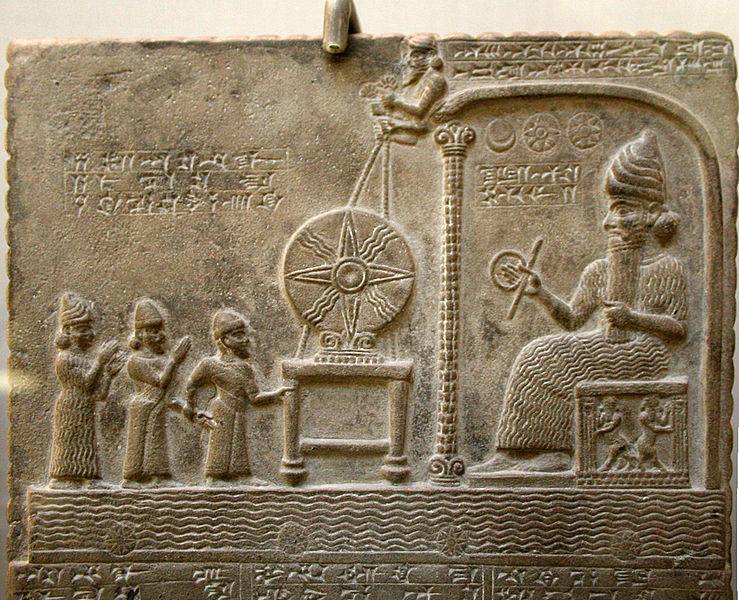
Pagan Frankish elites worshipped gods similar to those of other Germanic tribes — sky, war, and fertility deities akin to Wodan (Odin), Donar (Thor), and Frija.
🛡️ Merovingian Dynasty (c. 481 – 751)
(Frankish kings — named after their legendary ancestor Merovech)
| King | Reign | Notes |
|---|---|---|
| Clovis I | 481 – 511 | United the Franks; first Christian king of the Franks. |
| Chlothar I (Clotaire I) | 511 – 561 | Son of Clovis; reunited the Frankish realm. |
| Charibert I | 561 – 567 | Ruled Paris. |
| Guntram (Gontran) | 561 – 592 | Ruled Burgundy. |
| Sigebert I | 561 – 575 | Ruled Austrasia. |
| Chilperic I | 561 – 584 | Ruled Neustria; called the “Nero of France.” |
| Chlothar II | 584 – 629 | Reunited the kingdoms. |
| Dagobert I | 629 – 639 | Peak of Merovingian power; last strong king. |
| Clovis II | 639 – 657 | Beginning of the “do-nothing kings.” |
| Chlothar III | 657 – 673 | Ruled Neustria. |
| Childeric II | 662 – 675 | Ruled Austrasia; later over all Franks. |
| Theuderic III | 675 – 691 | Puppet of the mayors of the palace. |
| Clovis III | 675 – 676 | Rival claimant in Neustria. |
| Clovis IV | 691 – 695 | Child king. |
| Childebert III | 695 – 711 | Figurehead under Pepin of Herstal. |
| Dagobert III | 711 – 715 | Last weak Merovingian with power. |
| Chilperic II | 715 – 721 | Controlled by Charles Martel. |
| Theuderic IV | 721 – 737 | Died leaving no strong heir. |
| Childeric III | 743 – 751 | Deposed by Pepin the Short — end of the Merovingians. |
⚔️ Carolingian Dynasty (751 – 987)
(Founded by Pepin the Short, son of Charles Martel)
| King | Reign | Notes |
|---|---|---|
| Pepin III “the Short” | 751 – 768 | First Carolingian king; anointed by the Pope. |
| Charlemagne (Charles I) | 768 – 814 | Expanded the Frankish Empire; crowned Emperor in 800. |
| Louis I “the Pious” | 814 – 840 | Charlemagne’s son; his sons divided the empire. |
| Charles II “the Bald” | 843 – 877 | First king of West Francia, the future France. |
| Louis II “the Stammerer” | 877 – 879 | Son of Charles II. |
| Louis III & Carloman II | 879 – 882 (joint) | Sons of Louis II; short reigns. |
| Charles III “the Fat” | 884 – 888 | Briefly reunited the empire. |
| Odo (Eudes) | 888 – 898 | Count of Paris; elected king; rival of Carolingians. |
| Charles III “the Simple” | 898 – 922 | Granted Normandy to the Vikings. |
| Robert I | 922 – 923 | Brother of Odo; killed in battle. |
| Rudolph (Raoul) | 923 – 936 | Duke of Burgundy; chosen king. |
| Louis IV “d’Outremer” | 936 – 954 | Son of Charles III; raised in England. |
| Lothair | 954 – 986 | Son of Louis IV. |
| Louis V “the Lazy” | 986 – 987 | Died childless — end of the Carolingians. |
👑 Capetian Dynasty (987 – 1328)
(Founded by Hugh Capet; the monarchy becomes hereditary and stable)
| King | Reign | Notes |
|---|---|---|
| Hugh Capet | 987 – 996 | Elected king; founded the Capetian line. |
| Robert II “the Pious” | 996 – 1031 | Strengthened royal sanctity. |
| Henry I | 1031 – 1060 | Father of Philip I. |
| Philip I | 1060 – 1108 | Early crusading era. |
| Louis VI “the Fat” | 1108 – 1137 | Expanded royal domain. |
| Louis VII “the Young” | 1137 – 1180 | Second Crusade; ex-husband of Eleanor of Aquitaine. |
| Philip II “Augustus” | 1180 – 1223 | Strengthened monarchy; won Bouvines. |
| Louis VIII “the Lion” | 1223 – 1226 | Crusade against Albigensians. |
| Louis IX “Saint Louis” | 1226 – 1270 | Canonized king; led two Crusades. |
| Philip III “the Bold” | 1270 – 1285 | Son of Saint Louis. |
| Philip IV “the Fair” | 1285 – 1314 | Centralized power; conflict with the papacy; destroyed Templars. |
| Louis X “the Quarrelsome” | 1314 – 1316 | His death triggered succession crisis. |
| John I “the Posthumous” | 1316 | Died as an infant. |
| Philip V “the Tall” | 1316 – 1322 | Brother of Louis X. |
| Charles IV “the Fair” | 1322 – 1328 | Last direct Capetian king. |
⚜️ Valois Dynasty (1328 – 1589)
(Cadet branch of the Capetians; era of the Hundred Years’ War)
| King | Reign | Notes |
|---|---|---|
| Philip VI | 1328 – 1350 | Beginning of the Hundred Years’ War. |
| John II “the Good” | 1350 – 1364 | Captured at Poitiers by the English. |
| Charles V “the Wise” | 1364 – 1380 | Restored stability and administration. |
| Charles VI “the Mad” | 1380 – 1422 | Period of civil war and English occupation. |
| Charles VII “the Victorious” | 1422 – 1461 | Regained France with Joan of Arc’s help. |
| Louis XI “the Prudent” | 1461 – 1483 | Strengthened monarchy, weakened feudal lords. |
| Charles VIII | 1483 – 1498 | Italian campaigns; died childless. |
→ Valois-Orléans branch
| King | Reign | Notes |
|---|---|---|
| Louis XII | 1498 – 1515 | “Father of the People”; Italian wars. |
| Francis I | 1515 – 1547 | Renaissance king; rival of Charles V. |
| Henry II | 1547 – 1559 | Ended Italian wars; killed in a joust. |
| Francis II | 1559 – 1560 | Married Mary, Queen of Scots. |
| Charles IX | 1560 – 1574 | St. Bartholomew’s Day Massacre. |
| Henry III | 1574 – 1589 | Last Valois king; assassinated. |
🌿 Bourbon Dynasty (1589 – 1792; 1814 – 1830)
(Another Capetian branch; brought absolutism and revolution)
| King | Reign | Notes |
|---|---|---|
| Henry IV “the Great” | 1589 – 1610 | First Bourbon king; issued Edict of Nantes. |
| Louis XIII | 1610 – 1643 | Reign of Cardinal Richelieu. |
| Louis XIV “the Sun King” | 1643 – 1715 | Longest reign; built Versailles; apex of absolutism. |
| Louis XV | 1715 – 1774 | “Well-Beloved”; colonial wars, Enlightenment era. |
| Louis XVI | 1774 – 1792 | Executed during the French Revolution. |
⚙️ Revolution and Empire
(Non-royal and imperial rulers between Bourbon reigns)
| Leader | Title | Reign |
|---|---|---|
| Napoleon I Bonaparte | Emperor of the French | 1804 – 1814 / 1815 (Hundred Days) |
| Louis XVIII | King (Bourbon Restoration) | 1814 – 1824 |
| Charles X | King (Bourbon Restoration) | 1824 – 1830 |
💼 Orléans Monarchy (July Monarchy, 1830 – 1848)
| King | Reign | Notes |
|---|---|---|
| Louis-Philippe I | 1830 – 1848 | “Citizen King”; abdicated after February Revolution — last King of France. |
🦅 Bonaparte (Second Empire) — Technically an Emperor, Not a King
| Emperor | Reign | Notes |
|---|---|---|
| Napoleon III | 1852 – 1870 | Nephew of Napoleon I; ruled until the Franco-Prussian War. |
Summary Timeline
| Dynasty | Period | Founding King | Ending King |
|---|---|---|---|
| Merovingian | 481 – 751 | Clovis I | Childeric III |
| Carolingian | 751 – 987 | Pepin III | Louis V |
| Capetian | 987 – 1328 | Hugh Capet | Charles IV |
| Valois | 1328 – 1589 | Philip VI | Henry III |
| Bourbon | 1589 – 1792 / 1814 – 1830 | Henry IV | Charles X |
| Orléans | 1830 – 1848 | Louis-Philippe I | (end of monarchy) |
| Bonaparte (Emperors) | 1804 – 1815; 1852 – 1870 | Napoleon I | Napoleon III |