We often overlook the fact that many philosophers who gradually came to be celebrated—from the Renaissance to their full glorification in schools after the Industrial Revolution—belonged to cults and belief systems involving secret oaths and blasphemous practices. They were often associated with various forms of occult polytheism, collectively referred to by historians as the Mystery Religions.
Organized into sects, these cults demanded absolute secrecy, and their knowledge was revealed only to initiates. This tradition was essentially a form of Hellenistic Gnosticism. Mystery schools following similar rites also spread into the Roman world, practiced in secret by emperors and members of the elite.
The blasphemous heresies of Christian Gnosticism were likewise built upon these polytheistic cults and philosophies, particularly those originating in Egypt and Alexandria.
Today, many Christians overlook how fiercely the Church Fathers intellectually opposed the philosophers. Justin Martyr and John Chrysostom—both of whom had previously been devoted students of Greek philosophy—are two Church Fathers who completely refuted and dismantled the philosophical theology and existential doctrines concerning the soul.
The Gnostics and secret societies take pride in claiming to possess the keys to the mysteries behind all religions. In a sense, they were the first product of globalization. These serpent-infected doctrines have remained the guarded secrets of elites, emperors, and kings for centuries. The fairy tales of the Grail and the legends of magical rings serve as coded expressions of bloodlines that conceal their spurious doctrines.
The origins of the European monarchies and the lore surrounding them will be the subject of another article. I am currently publishing on the site a list of kings from various royal houses — French, English, Austrian, and others.
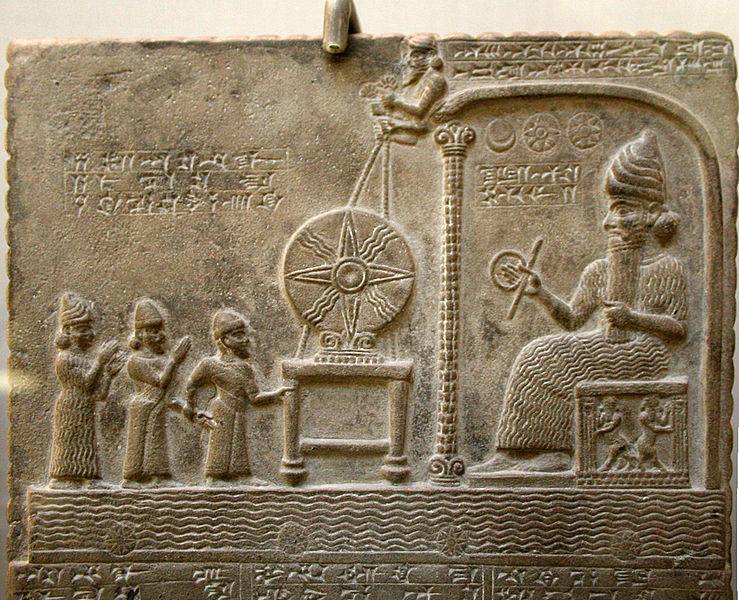
These Mystery Cults combined Babylonian, Egyptian, and Zoroastrian pantheistic beliefs. I will provide a brief list of the Greek cults and explain how these traditions were secretly transmitted within the Roman Empire and among its elite.
This is the very religion that God spoke against in the Bible, so it is time to reconsider the veneration of these philosophical figures and study them for what they truly were. Unfortunately, the Masonic campaign that glorifies freethinking and philosophy will likely interpret such reflections as a provocation against the established system of human knowledge.
I will also include a short passage from John Chrysostom’s second homily on the Gospel of John. Before becoming a devoted Christian, Chrysostom was the most outstanding student of the orator Libanius, who often lamented that the Christians had taken away his best pupil. John Chrysostom was a unique Christian teacher whose vast body of scriptural commentaries continues to transform lives.
Some of these things indeed the disciples of Plato and Pythagoras enquired into. Of the other philosophers we need make no mention at all; they have all on this point been so excessively ridiculous; and those who have been among them in greater esteem than the rest, and who have been considered the leading men in this science, are so more than the others; and they have composed and written somewhat on the subject of polity and doctrines, and in all have been more shamefully ridiculous than children. For they have spent their whole life in making women common to all, in overthrowing the very order of life, in doing away the honor of marriage, and in making other the like ridiculous laws. As for doctrines on the soul, there is nothing excessively shameful that they have left unsaid; asserting that the souls of men become flies, and gnats, and bushes, and that God Himself is a soul; with some other the like indecencies.
And not this alone in them is worthy of blame, but so is also their ever-shifting current of words; for since they assert everything on uncertain and fallacious arguments, they are like men carried here and there in Euripus, and never remain in the same place.
John Chrysostom continues, and it is interesting to emphasize what he says: at that time, the Greek philosophers were already largely forgotten and intellectually defeated. The entire homily is a masterpiece, for in its other passages Chrysostom exalts the Apostle John, setting his clear and inspired teachings in direct opposition to the corrupted Greek conceptions of the soul.
And as for the writings of the Greeks, they are all put out and vanished, but this man’s shine brighter day by day. For from the time that he (was) and the other fishermen, since then the (doctrines) of Pythagoras and of Plato, which seemed before to prevail, have ceased to be spoken of, and most men do not know them even by name. Yet Plato was, they say, the invited companion of kings, had many friends, and sailed to Sicily. And Pythagoras occupied Magna Græcia, and practiced there ten thousand kinds of sorcery. For to converse with oxen, (which they say he did,) was nothing else but a piece of sorcery. As is most clear from this. He that so conversed with brutes did not in anything benefit the race of men, but even did them the greatest wrong. Yet surely, the nature of men was better adapted for the reasoning of philosophy; still he did, as they say, converse with eagles and oxen, using sorceries. For he did not make their irrational nature rational, (this was impossible to man,) but by his magic tricks he deceived the foolish. And neglecting to teach men anything useful, he taught that they might as well eat the heads of those who begot them, as beans. And he persuaded those who associated with him, that the soul of their teacher had actually been at one time a bush, at another a girl, at another a fish.
Are not these things with good cause extinct, and vanished utterly? With good cause, and reasonably. But not so the words of him who was ignorant and unlettered; for Syrians, and Egyptians, and Indians, and Persians, and Ethiopians, and ten thousand other nations, translating into their own tongues the doctrines introduced by him, barbarians though they be, have learned to philosophize.
And as, if you uncover those sepulchers which are whitened without you will find them full of corruption, and stench, and rotten bones; so too the doctrines of the philosopher, if you strip them of their flowery diction, you will see to be full of much abomination, especially when he philosophizes on the soul, which he both honors and speaks ill of without measure. And this is the snare of the devil, never to keep due proportion, but by excess on either hand to lead aside those who are entangled by it into evil speaking. At one time he says, that the soul is of the substance of God; at another, after having exalted it thus immoderately and impiously, he exceeds again in a different way, and treats it with insult, making it pass into swine and asses, and other animals of yet less esteem than these.
So, this is the list of the Greek “Eat the Apple” team. Take your time to investigate and uncover for yourself the abominations behind these cults through various sources.
When researching polytheism and mythology, be careful not to get lost in the foggy narratives. It’s important to understand that all these demonic deities correspond in some way to celestial bodies — the planets, the Sun, the Moon, and the North Pole. They all share these patterns through a highly organized syncretism of symbols and interchangeable folk stories.
These were the philosophers of kings, and their rituals and initiations were later adopted by European monarchs through the Arthurian, Grail, and Ring legends, as well as the Tuatha Dé Danann and Hyperborean Aryan lore. It is the heresy of the powerful — the rulers, the Gnostics, and the cult of reason — who all share the same table within Masonic lodges.
The Greek Mystery Religions: Structure, Symbolism, and Soteriological Function
Abstract
This essay examines the principal forms of Greek mystery religion (mystēria) from the Archaic through the Hellenistic periods, emphasizing their theological structure, ritual symbolism, and function in the religious life of the individual. In contrast to the public, civic cults of the Olympian pantheon, the mysteries constituted esoteric traditions of initiation, purification, and salvation. Through an analysis of their major manifestations — the Eleusinian, Dionysian, Orphic, Samothracian, and other related cults — the study elucidates the role of initiation as a transformative encounter between human and divine, and considers their enduring philosophical and cultural significance.
1. Introduction: The Nature of the Mysteries
The term mystery religion (μυστήριον, from myein, “to close the eyes or lips”) refers to a category of ancient Greek cults that required initiation and secrecy. These were not “secret societies” in the modern sense, but rather ritual systems that demanded personal participation and withheld their inner symbolism from the uninitiated. Their primary aim was not the maintenance of civic order, as in the Olympian cults, but the spiritual transformation of the individual through ritual experience.
In a cultural world dominated by public sacrifice and collective worship, the mystery traditions introduced a form of interior religiosity, offering the initiate (mystēs) the hope of divine communion, moral purification, and a blessed afterlife.
2. The Eleusinian Mysteries
The Eleusinian Mysteries, centered at Eleusis near Athens, were the most celebrated and enduring of the Greek mystery cults. Dedicated to Demeter and Persephone, they dramatized the myth of the goddess’s search for her daughter and the cyclical return of fertility to the earth.
The initiatory process involved fasting, ritual purification, and participation in a secret nocturnal ceremony within the Telesterion (initiation hall). The central vision (epopteia), though never revealed, symbolized the renewal of life and the promise of immortality. As the Homeric Hymn to Demeter suggests, the Eleusinian rites reconciled human mortality with cosmic regeneration, integrating agriculture, myth, and eschatology into a single religious experience.
3. The Dionysian Mysteries
The Dionysian cult, pervasive throughout Greece and Thrace, celebrated Dionysus, god of wine, ecstasy, and divine madness. Its mysteries revolved around themes of death, dismemberment, and rebirth, reflecting both the fertility of nature and the transformation of the human psyche.
Participants sought enthousiasmos — possession by the god — through rhythmic dance, music, and ecstatic ritual. This temporary transcendence of individuality allowed initiates to experience union with the divine and liberation from ordinary consciousness. Philosophically, the Dionysian mysteries articulated an ontology of life as cyclical energy: destruction as precondition of renewal, multiplicity as expression of the one divine life.
4. The Orphic Tradition
Closely related to the Dionysian current were the Orphic Mysteries, attributed to the mythical singer and sage Orpheus. Orphism combined elements of Thracian shamanism with a moralized theology emphasizing the divine origin and exile of the soul.
According to Orphic cosmogony, humanity was born from the ashes of the Titans after they consumed Dionysus-Zagreus; thus, every human soul bears both Titanic impurity and Dionysian divinity. The Orphic life, expressed in poems, hymns, and initiation tablets (lamellae), sought to purify the soul through ritual abstinence, vegetarianism, and contemplation, in order to achieve release (lysis) from the cycle of rebirth. The Orphic mystery system thus marks a decisive moment in the interiorization of Greek religion: salvation becomes an ethical and spiritual task rather than a civic duty.
5. The Samothracian Mysteries
The Samothracian Mysteries, devoted to the Great Gods (Megaloi Theoi) — possibly identified with the Cabiri — occupied a distinct but related position within the Greek mystery landscape. The cult’s initiations, open to both Greeks and foreigners, promised protection at sea and divine favor in life and death.
Although the precise content of the rites remains obscure, inscriptions and literary sources attest to nocturnal ceremonies, torch processions, and sacred emblems symbolizing rebirth and safety. The Samothracian tradition thus integrated maritime protection with the broader Hellenic theme of personal salvation through divine union.
6. Egyptian and Eastern Influences: Isis, Cybele, and Sabazios
From the Hellenistic period onward, Greece absorbed several foreign mystery cults, most notably those of Isis and Osiris, Cybele and Attis, and Sabazios. These traditions emphasized cosmic sympathy, maternal divinity, and the resurrection motif, reflecting a fusion of Greek, Egyptian, and Anatolian religious sensibilities.
The Isiac Mysteries, in particular, presented Isis as a universal savior and mother of the cosmos, offering initiates assurance of eternal life. Similarly, the cult of Cybele and Attis dramatized death and regeneration in the seasonal cycles, while that of Sabazios blended ecstatic and chthonic elements, symbolized by the sacred serpent.
7. The Mithraic Mysteries
Though of Persian origin, the Mithraic Mysteries entered the Greco-Roman world as a structured initiatory religion during the first centuries BCE–CE. Dedicated to the solar deity Mithras, this cult employed a highly symbolic cosmology, depicting the initiate’s ascent through the seven planetary spheres.
The mithraeum — an artificial cave — represented the cosmos itself, and initiation involved successive grades of spiritual elevation. Mithraism epitomizes the cosmic and soteriological dimension of the mystery religions in their final, syncretic phase.
8. Common Features and Theological Significance
Despite their diversity, all Greek mystery religions shared several core features:
|
Concept |
Description |
|---|---|
|
Initiation (myēsis) |
A transformative rite through which the participant entered into a sacred community and experienced divine mysteries. |
|
Secrecy |
The content of the rites was not to be disclosed, preserving their sacral authority and experiential immediacy. |
|
Purification (katharsis) |
Moral and ritual cleansing as a precondition for revelation. |
|
Ritual Death and Rebirth |
Symbolic descent into the underworld followed by regeneration or enlightenment. |
|
Eschatological Promise |
Hope for a blessed afterlife or reunion with the divine source. |
|
Personal Salvation |
Unlike civic cults, the mysteries addressed the individual’s existential and spiritual needs. |
The mysteries thus embodied a profound shift from collective ritual to personal soteriology, preparing the conceptual ground for later Hellenistic and philosophical mysticisms — notably Pythagoreanism, Platonism, and Neoplatonism
Greek and Roman Mystery Religions: A Comparative Analysis of Structure, Theology, and Social Function
Abstract
The mystery religions of the ancient Mediterranean represent one of the most significant developments in pre-Christian spirituality. While Greek and Roman mystery traditions shared certain ritual and theological features — secrecy, initiation, and the promise of salvation — their cultural expressions differed in form and function. This essay compares the Greek mysteries (notably the Eleusinian, Dionysian, Orphic, and Samothracian cults) with the Roman mystery cults (such as those of Mithras, Isis, Cybele, and Bacchus), examining their respective conceptions of divinity, the individual, and the afterlife. The analysis argues that Roman mysteries transformed the Greek initiatory paradigm into a cosmopolitan and imperial form of personal religion, adapting Greek spiritual motifs to a new political and social environment. In other words, similar to modern new age.
1. Introduction: The Concept of the Mystērion and Its Roman Adaptation
In the Greek world, the term mystērion (μυστήριον) denoted an initiatory rite involving secret knowledge and personal transformation. The initiate (mystēs) underwent purification and symbolic rebirth to attain divine favor or immortality.
When such cults entered Roman culture, they were reinterpreted through the lens of Roman religiosity, which emphasized pietas (duty), communitas, and loyalty to the state. Roman adoption of Greek and Eastern mystery cults did not merely replicate Greek prototypes; it universalized and institutionalized them, integrating personal salvation into the broader framework of the Imperium Romanum.
Thus, while Greek mysteries focused on initiation into divine truth, Roman mysteries often emphasized devotion, service, and allegiance to divine powers that mirrored imperial order.
2. The Greek Paradigm: Initiation and Epiphany
The Greek mystery religions developed between the 7th and 4th centuries BCE within the context of the polis. They arose as complementary alternatives to public worship, focusing on personal regeneration and eschatological hope.
-
Eleusinian Mysteries centered on Demeter and Persephone, dramatizing fertility and rebirth through sacred drama and vision (epopteia).
-
Dionysian and Orphic Mysteries emphasized ecstasy, purification, and the liberation of the soul from material bondage.
-
Samothracian and Cabiric Mysteries offered protection and salvation through chthonic initiation.
These cults were ritual rather than doctrinal; their theology was experienced symbolically, not systematically articulated. The divine was immanent in natural cycles and accessible through participation, rather than through creed or belief.
Philosophically, the Greek mysteries fostered a spiritual anthropology in which the human soul mirrored the cosmos — an idea later developed in Pythagorean and Platonic thought.
3. The Roman Transformation: Cosmopolitanism and Imperial Religion
By contrast, the Roman mystery religions of the late Republic and Empire (1st century BCE – 4th century CE) emerged in a multicultural imperial context, absorbing Greek, Egyptian, and Near Eastern elements. These included:
-
The Cult of Isis and Osiris, emphasizing personal salvation through the maternal goddess;
-
The Mithraic Mysteries, centered on the solar god Mithras and a hierarchical initiation reflecting cosmic order;
-
The Cult of Cybele and Attis, dramatizing death and rebirth in the service of the Great Mother;
-
The Bacchic (Dionysian) Mysteries, which retained their ecstatic Greek character but were periodically suppressed in Rome for political reasons (as in the Senatus Consultum de Bacchanalibus, 186 BCE).
These cults differed from the Greek prototypes in several ways:
-
Institutional Organization:
Roman mystery cults often formed structured communities or collegia with ranks, degrees, and priestly hierarchies. Mithraism, for example, had seven levels of initiation, mirroring the planetary spheres. -
Universal Accessibility:
Unlike the local or polis-based Greek cults, Roman mysteries were open to foreigners, slaves, and women, reflecting the cosmopolitan ethos of the empire. -
Doctrinal Development:
Roman mysteries developed more explicit soteriological doctrines, often promising personal resurrection or eternal salvation rather than symbolic rebirth alone. -
Political Ambivalence:
Some Roman mystery cults, especially those of Eastern origin, were viewed with suspicion for their foreignness and potential subversion of Roman civic values. Yet others, such as the Imperial Cult, appropriated mystery imagery to sacralize imperial authority itself.
4. Theological and Symbolic Comparisons
|
Dimension |
Greek Mysteries |
Roman Mysteries |
|---|---|---|
|
Divine Nature |
Immanent, cyclical, associated with fertility and cosmic life (Demeter, Dionysus) |
Transcendent and cosmic, often solar or universal (Mithras, Isis, Sol Invictus) |
|
Ritual Focus |
Purification, symbolic death and rebirth, vision (epopteia) |
Hierarchical initiation, cosmic ascent, divine service |
|
Soteriology |
Moral and spiritual purification; blessed afterlife in the underworld |
Personal salvation; immortality or union with the god |
|
Sociological Function |
Supplement to civic cult; localized and seasonal |
Supra-local, transnational; alternative community within empire |
|
Gender and Participation |
Varied but often restricted (e.g., Eleusis for both sexes; others male-only) |
Broader inclusivity; Isis and Cybele cults welcomed women and non-citizens |
|
Philosophical Influence |
Pythagorean and Platonic metaphysics of the soul |
Stoic and Neoplatonic cosmology; fusion of Greek philosophy with Eastern theology |
5. From Polis to Empire: The Changing Function of Initiation
In Greece, initiation into the mysteries expressed a participatory cosmology: the human mirrored the divine through ritual identification. In Rome, initiation came to signify personal allegiance to a salvific deity within a universal cosmic order.
This shift from symbolic participation to moral devotion parallels the transformation of Mediterranean religion more broadly — from civic cult to personal soteriology. The Roman mysteries thus served as proto-soteriological systems, mediating between pagan religiosity and the emerging monotheistic tendencies of Late Antiquity.
6. Philosophical and Historical Continuities
Both Greek and Roman mysteries contributed to the intellectual and spiritual heritage that would later inform Hellenistic philosophy, Neoplatonism, and early Christianity.
-
The Greek mysteries introduced the idea of divine revelation through ritual experience.
-
The Roman mysteries developed this into a structured theology of salvation, emphasizing the transformation of the self and moral renewal.
In this sense, the Roman adaptation of Greek mystery traditions represents not a degeneration, but an evolution toward universality — a synthesis of ritual, philosophy, and theology that anticipated later religious forms.
7. Conclusion
The comparison between Greek and Roman mystery religions reveals a profound continuity of religious imagination coupled with significant cultural transformation.
The Greek mysteries were initiations into cosmic participation — aesthetic, agricultural, and symbolic. The Roman mysteries, shaped by imperial pluralism, reinterpreted those same symbols in the language of personal devotion, cosmic hierarchy, and salvation.
Both traditions sought to reconcile the human with the divine; yet where Greek initiates sought vision and harmony, Roman initiates sought deliverance and immortality.
Together, they form a continuous spiritual arc — from ritual experience to religious interiority, from polis religion to imperial faith, and ultimately toward the mystical anthropology that would dominate the religious thought of Late Antiquity.
PLATO – PYTHAGORAS – ARISTOTELES list of beliefs
Pythagoras and Polytheistic Resonances
1. Orphic Mysteries
Why:
The Pythagorean community was Orphic in structure and spirit: secrecy, purification, vegetarianism, the transmigration of souls (metempsychosis), and the pursuit of divine harmony through ritual and philosophy.
Resonances:
-
The soul descends into the body like a divine spark imprisoned in matter — an Orphic theme.
-
Through music, mathematics, and moral purification, it can ascend again toward the divine order.
-
The cosmos itself is a living harmony — the “music of the spheres,” an Orphic hymn made audible to the intellect.
Pythagoras is an Orphic hierophant, priest of the soul’s harmony with the cosmic lyre.
2. Apollo (Delphi and the Sacred Harmony)
Why:
Pythagoras was closely linked to Apollo, god of light, music, and measure. According to legend, he was initiated at Delphi, where the monochord revealed to him the mathematical ratios underlying musical intervals.
-
Apollo symbolizes the rational, purifying, harmonic dimension of the divine — order through proportion.
-
Pythagoras’ entire philosophy is an Apollonian religion of number: the divine manifests in ratios, symmetries, and harmonic relations.
Pythagoras serves Apollo, measuring the cosmos in music and number.
3. Egyptian / Hermetic Wisdom (Thoth)
Why:
Ancient tradition claimed that Pythagoras studied in Egypt, learning geometry, sacred number, and ritual cosmology.
-
Thoth (Hermes Trismegistus) is the god of measurement, proportion, and sacred writing — the very arts Pythagoras sacralized.
-
His number-symbolism (tetraktys, the sacred fourfold unity) mirrors the Hermetic correspondences between divine, cosmic, and human orders.
Pythagoras as Hermetic mathematician — deciphering the code of the divine through number.
4. Cult of the Muses
Why:
For Pythagoras, music was not entertainment but the audible manifestation of cosmic order.
-
He and his followers used music to heal the soul, to align inner rhythms with the harmony of the world.
-
The Muses — patrons of song, poetry, and inspiration — embody the spiritual side of mathematics: beauty as divine proportion.
Resonances:
-
The Muses represent the bridge between sense and intellect, passion and number.
-
Pythagoras’ philosophy thus becomes a ritual of intellectual song — science as hymn.
✨ Summary Table
|
Mythic / Religious Frame |
Core Resonance |
Cultic or Symbolic Role for Pythagoras |
|---|---|---|
|
Orphic Mysteries |
Purification, transmigration, divine harmony |
Initiate of the soul’s ascent through music |
|
Apollo (Delphi) |
Light, proportion, rational order |
Priest of mathematical harmony |
|
Hermetic / Thothian |
Sacred geometry, divine measure |
Geometer of the cosmic code |
|
Muses |
Music, inspiration, divine beauty |
Mystic of the harmonic universe |
Plato and Polytheistic Resonances
1. The Eleusinian Mysteries (Demeter and Persephone)
Why:
The Allegory of the Cave is a philosophical echo of the Eleusinian initiations: the soul descends into darkness (the cave), experiences the shadows of mortal illusion, and then ascends into the light of truth — just as initiates in the Mysteries symbolically died and were reborn to divine understanding.
Resonances:
-
Demeter and Persephone symbolize the eternal cycle of descent and return — ignorance and enlightenment.
-
Plato’s metaphysics of the Forms corresponds to the divine realities glimpsed by initiates in their vision beyond the world of becoming.
-
His philosopher is a mystes, a seeker purified through reason and love (eros) to behold the eternal.
Plato is the hierophant of philosophy’s Eleusis — leading souls from the shadowed cave to the radiant field of being.
2. Cult of Apollo (God of Light, Measure, and Intelligibility)
Why:
Plato’s universe is ordered, luminous, and harmonic — qualities of Apollo, god of light, truth, and proportion.
-
The Form of the Good is like the sun in the Republic: it illuminates all intelligibility and makes knowledge possible.
-
Apollo’s Delphic maxim, “Know thyself,” is the seed of the Platonic ascent from sensible illusion to intellectual self-knowledge.
-
The Apollonian spirit defines Plato’s commitment to clarity, geometry, and harmony.
Plato as Apollonian sage — philosopher-priest of the sun of the Good.
3. Orphic Mysticism
Why:
Plato’s view of the soul — its preexistence, imprisonment in the body, and eventual return to the divine — mirrors Orphic cosmology.
-
The Phaedo and Phaedrus describe the soul’s journey and purification in explicitly Orphic and Pythagorean terms.
-
To philosophize is to remember — anamnesis — the sacred knowledge forgotten in birth, as in Orphic myth.
-
The goal: to free oneself from bodily illusion and become godlike through virtue and contemplation.
Resonances:
-
Plato’s philosopher lives an initiatory life, not unlike an Orphic devotee seeking release from the cycle of rebirth (samsara avant la lettre*).*
4. Egyptian or Hermetic Resonance (Thoth / Hermes Trismegistus)
Why:
Ancient commentators (and later Neoplatonists) saw Plato as the Greek heir to Egyptian wisdom — the Hermetic or Thothian tradition.
-
Both stress the correspondence between the intelligible and the material worlds — “as above, so below.”
-
The Platonic Demiurge in the Timaeus mirrors the Hermetic craftsman-god shaping the cosmos in divine harmony.
-
Plato’s philosophy thus bridges myth and mathematics, revelation and reason.
?ᄌマ Plato as Hermetic mediator — philosopher-magus of the intelligible cosmos.
✨ Summary Table
|
Mythic / Religious Frame |
Core Resonance |
Cultic or Symbolic Role for Plato |
|---|---|---|
|
Eleusinian Mysteries (Demeter/Persephone) |
Descent and return, purification, illumination |
Hierophant of initiation into truth |
|
Apollo (Delphi, Light, Order) |
Reason, measure, intellectual clarity |
Priest of the Sun of the Good |
|
Orphic Mysticism |
Soul’s liberation and remembrance |
Mystic of divine recollection |
|
Hermetic / Thothian Wisdom |
Cosmic harmony, divine craftsmanship |
Philosopher-magus of the intelligible realm |
⚖️ Aristotle and Polytheistic Resonances
1. The Cult of Zeus / Olympian Hierarchy
Why:
Aristotle’s cosmos is hierarchical, rational, and teleological. The Prime Mover sits at the apex, pure actuality, unmoved but moving all else — very much like Zeus, the king of gods, who rules through order rather than caprice.
Resonances:
-
The celestial spheres correspond to divine intermediaries, much as the Olympian gods occupy ranks beneath Zeus.
-
Everything has its purpose (telos), and the universe is a well-ordered polity of forms and substances.
-
Aristotle is a high priest of cosmic hierarchy, revering structure, causality, and divine order.
2. Dionysian / Orphic Counterpoint (Soul and Nature)
Why:
Though less mystical than Plato, Aristotle recognizes the soul’s intrinsic role in the natural world (De Anima) and the presence of a life principle animating matter.
-
This echoes Orphic or Dionysian ideas of life, breath, and animation of the cosmos.
-
The soul is not just abstract; it is the form of the body, immanent in all living things — a divine spark in the natural hierarchy.
Aristotle as orderly Orphic priest: rational, but acknowledging the sacred vitality in nature.
3. Apollo / Solar Rationality
Why:
Aristotle’s philosophy prizes clarity, measure, and intelligibility — qualities associated with Apollo, god of reason, harmony, and knowledge.
-
Logic (Organon) is the tool of illumination, just as Apollo’s light reveals form and proportion.
-
Ethics and politics are structured around human flourishing (eudaimonia), reflecting Apollonian moderation, balance, and harmony.
Aristotle as Apollonian sage: mapping the cosmos and human life in harmonious proportions.
4. Planetary / Celestial Theurgy
Why:
In Aristotle’s cosmology, the heavens are made of aether, perfect and eternal, moved by unmoved intelligences.
-
Each celestial sphere has its intelligible principle, reminiscent of planetary divinities in pagan thought.
-
The universe is alive with order, each level reflecting higher intelligence.
Resonances:
-
Aristotle is a cosmic augur, discerning divine intelligences in the structure of nature.
-
His metaphysics combines natural observation with reverence for transcendent order.
✨ Summary Table
|
Mythic / Religious Frame |
Core Resonance |
Cultic or Symbolic Role for Aristotle |
|---|---|---|
|
Olympian / Zeus |
Hierarchy, order, ultimate cause |
High priest of cosmic hierarchy |
|
Orphic / Dionysian |
Soul, life principle, immanent divinity |
Priest of living nature |
|
Apollo / Sun |
Rational clarity, measure, proportion |
Sage of cosmic and human harmony |
|
Planetary / Celestial Theurgy |
Eternal heavens, intelligences |
Cosmic augur of celestial spheres |